
One more road to ride: Al Rynn’s mission for MND
Awareness, Fundraising, Living with MND, Personal Stories
9 July 2026
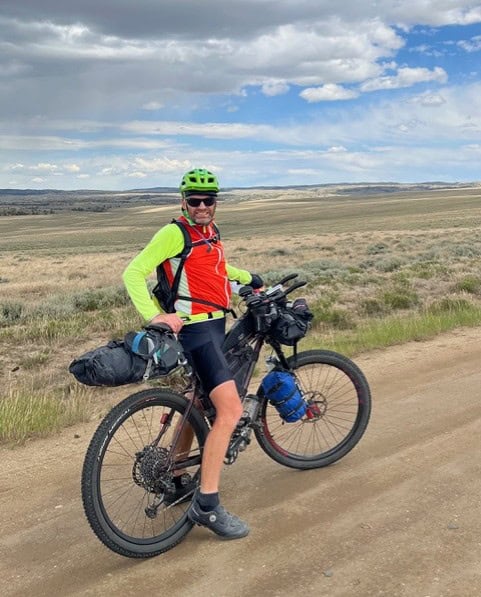
Adventure has always been at the heart of Al Rynn's life. In 2024, the 60-year-old set out to cycle more than 4,000km from Banff, Canada, to Antelope Wells on the US–Mexico border via the iconic Tour Divide bikepacking route. After covering 3,000km in 24 days, a persistent cough eventually forced him to abandon the ride, which he assumed was the result of long days on dusty roads and high mountain passes. A year later, in September 2025, he was diagnosed with motor neurone disease (MND).
On Friday 10 July, Al will set off on a 1,300km cycling adventure from Auckland airport to his home in Marahau at the top of the South Island. As his energy decreases and his voice deteriorates due to MND, Al is taking on the journey at a slightly quieter pace than previous adventures to ride some of the last roads in New Zealand he hasn't already explored by bike.
Along the way, he is raising funds for Motor Neurone Disease New Zealand, with his total reaching more than $5,000 before he’s even set off. We caught up with the intrepid Kiwi adventurer before he rolled out.
Q: How did you get into cycling? What do you love about it?
Cycling is my happy place and concentrating on riding allows me to destress. I’ve always enjoyed cycling and started touring with school friends when I was 13. I raced for a quite a few years but prefer touring to engage with locals and get a good look around.
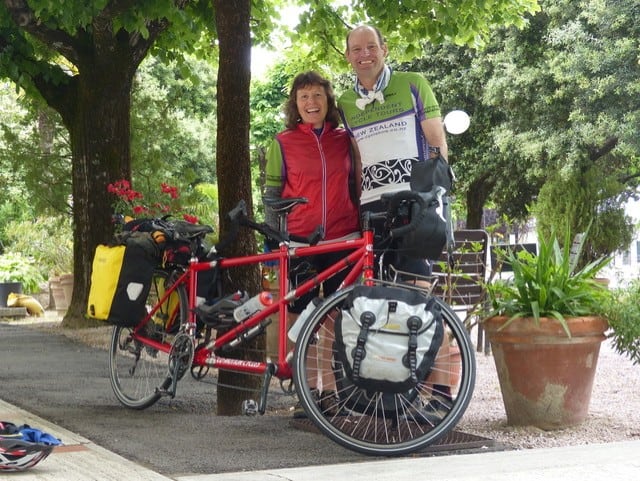
I’ve cycle toured in Italy, France, Australia and China and most roads and tracks in New Zealand over my life. I average about 4,000 to 8,000km per year.When my two daughters, Tarn and Francesca, were younger, I raced and toured with them to Christchurch and back. In 2014, I rode through Italy and France on a tandem with my wife Cath.
Q: Tell us about this bikepacking adventure starting on 10 July 2026?
I’m planning to ride from Auckland to my home in Marahau. Ideally, I wouldn’t normally be riding in July, but I feel my own energy is decreasing with MND, my voice is getting pretty poor and I want to squeeze in this ride to cover some North Island roads I haven’t covered before.
It will be about 1,200 to 1,300km in total – it should take about 16 days as I’m trying not to overstretch myself. I’ll probably camp unless the weather is really bad because that’s what I’ve always done.
Q: How can people follow your progress and support your fundraising effort?
People can support my fundraising on my official MND NZ fundraising page.
My route goes from Auckland airport to Pukekohe – Port Waikato – Waingaro Hot Springs – Kawhia – Piopio – Ohura – Whangamomona – Inglewood – around Mt Taranaki – Hawera – Whanganui – Hunterville – Ashhurst – Pahiatua – Masterton – Rimutaki Incline – Wellington – ferry to Picton – Queen Charlotte Drive – Havelock – Pelorus – Maungatapu track to Nelson – Marahau.
To follow my progress you can log into my Garmin InReach tracker using this link and password.
Link: https://share.garmin.com/mapshare/AMMR9/Map/MapSharePassword?url=AMMR9
Password: 1865
Q: Why is it important to you to fundraise for MND NZ?
I feel the number of people being diagnosed with MND is increasing rapidly. The cause is still really unknown and the treatment is essentially just palliative, so research and support are very important. Therefore, putting the word out there, inspiring people and raising money is very important to me.
Q: You were diagnosed with the progressive bulbar palsy variant of MND in September 2025, what symptoms did you first notice?
I had a couple of prolonged 15-minute coughing episodes but put it down to working hard and probably a virus. When I rode Tour Divide route in 2024, I developed a persistent cough that I put down to riding on dusty roads days after day and high passes. But I was sufficiently concerned that I didn’t finish the route completely.
Last year, I noticed in the winter my voice was changing. I went to my GP and organised a CT scan privately of my head as I thought a brain tumour or a cerebral event may have been the cause.
Q: At the time, did you think you might have been experiencing MND symptoms – or something else?
No, I thought the symptoms were brought on by working too hard (something I’ve always done) and exercising too hard. I had also had a lot of stress in my life over the previous year.
Q: Can you take us back to receiving the diagnosis?
I was assessed by a private geriatrician with a lot of experience in neurological conditions. A week later I visited an old nursing friend who had been tube feeding someone with the bulbar variant of MND. I left to go for a mountain bike then stopped for a coffee and was scrolling through my emails. One came in from the geriatrician I’d seen saying I had probable MND, bulbar variant and they were referring me to a neurologist for nerve conduction studies.
I was pretty shocked as I’ve always looked after myself – no smoking, minimal drinking, good diet and regular exercise.
Q: How has your MND progressed?
According to my support team, I’m progressing quite slowly, but my voice is pretty poor now. I get more tired and cough with certain foods or when I’m eating and tired. I’ve intentionally slowed down my eating and drinking to reduce the risk of aspirating (accidentally inhaling into the airway). If I take it slowly, I have no problems. I have a persistent “pins and needles” feeling in my feet and arm (fasciculation) and I get cramps often.
Q: What support have you received?
I keep in touch with MND NZ Regional Support Advisor Jasmine Chua and Carla Wilton who is the local MND clinical support person at the hospital. I have a range of appointments with other specialists like speech language therapist, dietician etc.
Q: Can you tell us about your work life and other adventures?
I’ve done many jobs from apple picking and horticultural work, commercial photographic printer, ski industry, working for Lands and Survey and NZ Forest Service (before DOC). Then I thought I should get a qualification, so I trained as a nurse in Christchurch.
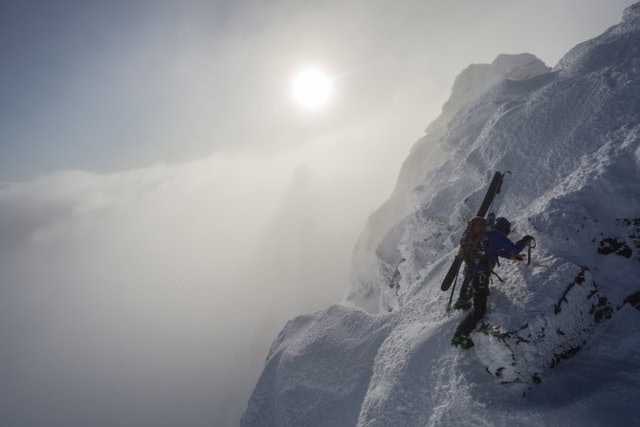
I chose Christchurch as I was a passionate tramper, mountaineer and skier and it was a good base close to the mountains I so loved. I set up a gardening and tree business during this time. When I finished training there weren’t many nursing job in New Zealand, so I did a season Ski Patrolling at the Rainbow ski area in Marlborough.
Then I relocated to Royal Brisbane Hospital where I initially worked in a very intense medical ward before transferring to ICU. I also did a lot of agency work in other hospitals doing ICU and Coronary Care Unit work.
In 1994, my wife Cath and I shifted back to NZ as my first daughter Tarn was due. I did some part time work at Nelson Hospital but jobs were scarce. So, I set up a sea kayaking company operating in Abel Tasman National Park and Marlborough Sounds Maritime Park.
While we were in Australia in 1993, my wife Cath and I – with three friends – sea kayaked from Port Douglas, just north of Cairns to Thursday Island in Torres Strait just south of New Guinea over five weeks. I sat my Level 1 Sea Kayak Guide qualification and ended up being a national assessor of guides a few years later.
We sold our house in Nelson and relocated to Marahau in early 1999. We built sheds on our land for kayaks, toilets and showers, a backpackers and camping ground and a few years later added water taxis to the mix. So, I did my commercial skipper’s ticket.
In 2007, we sold the sea kayaking and water taxi operation to Ngāi Tahu and retained the backpackers and camping. In 2008, I was asked to manage Ngai Tahu's operation in Marahau – nine companies and 143 staff. We consolidated this operation and I went back to helping Cath run the backpackers in 2010 which we continued until we sold it in 2016.
In 2018, my daughter’s partner was tragically killed in a plane crash, so I took over the tree business he had just set up, building this up for my daughter and getting my arborist qualification. My daughter Tarn did an apprenticeship with me as well. I still do the odd day in the trees and enjoy the work immensely but also enjoy my recreation.
Over the last 14 years, I’ve also done quite a bit of offshore sailing, and I bought a quite run down yacht and over the last 6 years I have completely rebuilt it. For around 20 years I’ve been involved with predator trapping in Abel Tasman National Park and still do a day on this every couple of months.
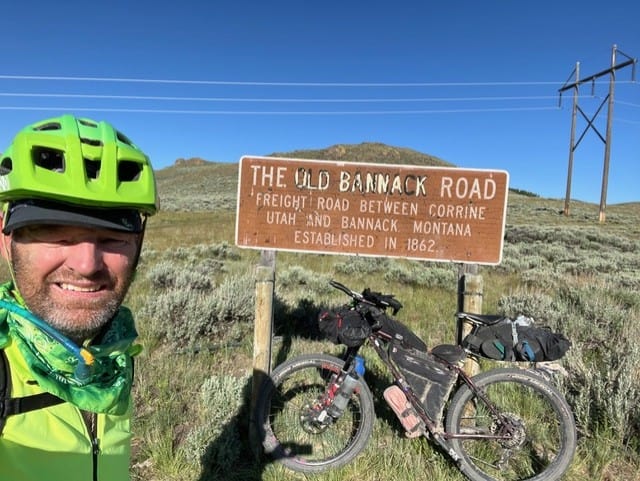
Q: For the cycling enthusiast’s out there, what type of bike do you ride?
On this ride, a Focus Atlas, on the Munda Biddi I did in Australia about two months ago my Ritchie Ultra. I have a Trek fully suspended mountain bike but recently gave away my Mongoose Randoneer touring bike after 40,000km and my 1989 Giant Cadex which I’d ridden as a fixie (fixed-gear bike) for years. I recently sold my Litespeed Ultimate titanium road bike. On the Tour Divide I rode a Surly Krampus which the Ritchie replaced.
You can support Al’s adventurous efforts for people living with motor neurone disease on his MND NZ fundraising page