


Insight with purpose: inside the MND Registry
NZ MND Registry, Research
30 October 2026

Every step taken in the Walk to Defeat MND helps fund vital work that supports people affected by motor neurone disease today while building hope for tomorrow.
One of the projects made possible through the generosity of our supporters is the MND Registry. Funded entirely by MND NZ since 2017, the Registry helps researchers better understand MND in Aotearoa New Zealand, improve care, identify trends, and support future research.
In this article, first published in the Winter 2025 edition of MND News magazine, we meet the University of Otago team behind the Registry and learn why every person who joins helps build a clearer picture of MND in New Zealand.
In a secure corner of the University of Otago, neurologist Dr Sarah Buchanan and researcher Dr Margaret Ryan are building something quietly powerful. The MND Registry is helping to map motor neurone disease (MND) in Aotearoa — connecting people to research, uncovering patterns, and creating a legacy of knowledge to guide care and understanding for years to come.
What is the MND Registry?
A registry of people living with motor neurone disease (MND) in New Zealand sits behind firewalls in the highest-security research databases at the University of Otago.
Over two hundred people are currently on the MND Registry. Their confidential data and details make up what the registry’s Primary Investigator, Dr Sarah Buchanan — a consultant neurologist at Dunedin Hospital and researcher at the University of Otago —describes as a kind of “Swiss army knife” project: a small, focused initiative designed to support many functions, from improving care to driving research and advocacy.
“Basically, we’re aiming to identify all people with motor neurone disease living in New Zealand, to understand more about their MND, and how they’re getting on. For those who want to, we’re aiming to use that connection to help them engage with other research opportunities,” Dr Buchanan says.
From pilot to powerhouse
The Registry, funded entirely by Motor Neurone Disease New Zealand, was initiated in 2017 and curated at Auckland University. In 2024, with a view to expanding the registry’s depth and capability, it shifted south to the University of Otago and is now overseen by Dr Buchanan, alongside Curator Dr Margaret Ryan, a Senior Research Fellow in the University’s Departments of Medicine and Anatomy.
An immediate target for the pair is to enrol everybody with MND in New Zealand. It’s understood that approximately four hundred New Zealanders live with MND at any given time. Knowing as much as possible about MND can bolster efforts for further research into effective therapies and care, improving quality of life, and finding a cure.
Registering simply involves completing a basic consent form, which can be completed online or with the support of an MND NZ support advisor or practitioner. Nothing else is needed from the person with MND, the information comes from the MND clinical records. Dr Buchanan says even the most general details help put pieces of the MND jigsaw puzzle together.
“Even if it’s just gathering data about who’s getting MND, how many people are in different regions, and how they’re doing, that information is really powerful. It lets us connect to advocacy, look at benchmarks in MND care across the country and internationally, and gives us the power to plan other projects as well,” Dr Buchanan says.
Momentum and meaning
Dr Ryan’s role involves compiling and analysing the Registry’s data and helping to connect it with research projects. She’s eager to see greater momentum in MND research and care, driven by the Registry’s valuable insights.
“MND generally progresses very rapidly, and having a Registry like this is something we need to have done yesterday. The more information we have, the more we can do- especially in supporting research that directly benefits those affected here in New Zealand,” says Dr Ryan.
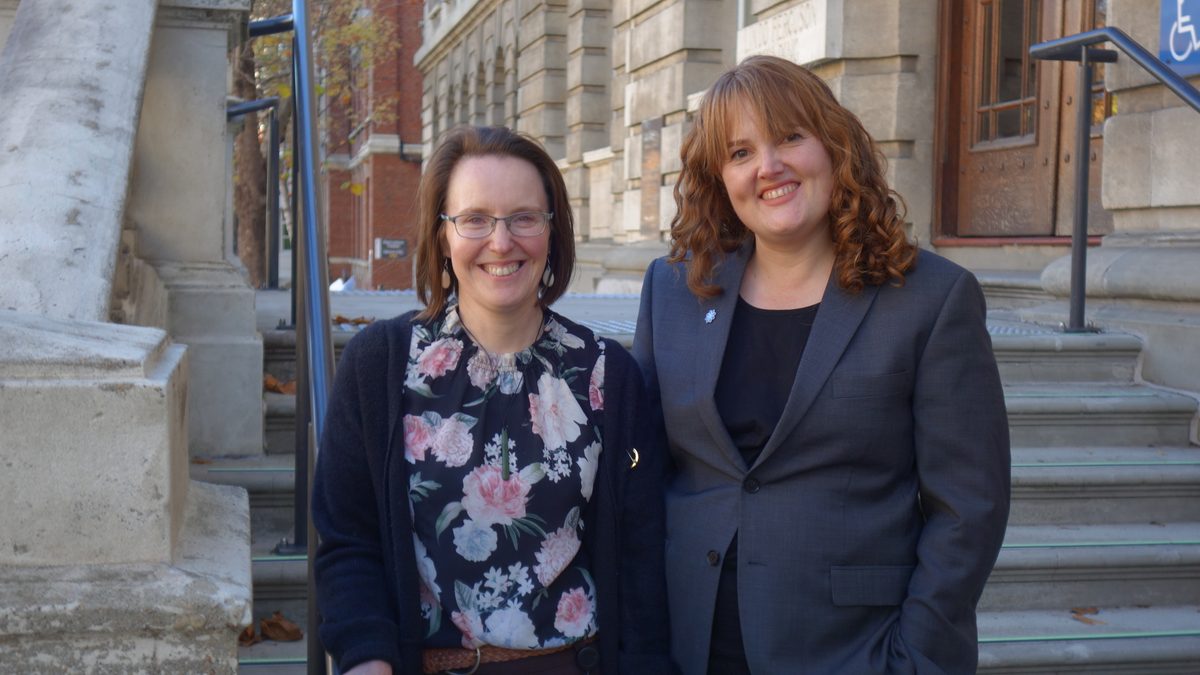
The Registry has already contributed to over a dozen research projects. As the number of people on the Registry grows, Dr Ryan believes there is significant potential to gain a greater understanding of why MND appears to be so prolific in New Zealand.
“Some of the previous research suggests that New Zealand has one of the highest rates of MND anywhere in the world, but we still have a lot to find out about what makes MND in New Zealand different from everywhere else. There’s still a huge amount to learn.”
Whilst Drs Buchanan and Ryan both want to see an uplift in people with MND joining the Registry, they’re also aware that simply living day-to-day with the disease can be a fight in itself.
“We know that many people out there would like to be part of research, but are limited in energy and time. But we would like everybody to know that they can still make a valuable contribution. Even just by signing the consent forms, we’re able to get a really precious input from them — as we can use their MND information and therefore count everyone living with MND as part of seeing the bigger picture,” Dr Buchanan says.
An essential aspect of the Registry’s characteristics is the high level of security encryption and confidentiality of the data. When a person joins, the Registry staff, namely Drs Buchanan and Ryan, can collect information from their clinical records related to MND, anonymising that information for research use.
Registry data is stored anonymously in a secure database maintained by the University of Otago. No one outside of the MND Registry has access to the names of people enrolled.
A quiet legacy
The Registry also carries a quiet legacy. For many, the contribution of their MND information continues beyond their lifetime. By making this data available for future research, they are helping to grow understanding of the disease and support others in the MND community. Data for 400 people with MND — including 200 currently living with the disease — is now in the Registry, with all leaving a legacy to help the MND community in the future.
Drs. Buchanan, Ryan, and Motor Neurone Disease New Zealand have set a lofty goal of having everyone living with MND in New Zealand join the Registry. With over two hundred people already signed on, and around four hundred people living with the disease here, there is plenty of scope to increase the pool of knowledge.
“Contributing to research is important for so many reasons, but ultimately, what we hear from this community is the need for better care and to carry out research that brings us closer to finding a cure. The Registry can play a small part in that on quite a few levels,” Dr Buchanan says.
How to take part
People who are clients of MND NZ for connection with a support advisor and other support are not automatically part of the MND Registry.
Anyone with MND who would like to learn more or join the MND Registry can speak with their MND NZ support advisor, talk to their health practitioner, or enrol directly online at mnd.org.nz/research/mnd-registry. If you’re unsure whether you’re already part of the Registry, contact Registry Curator Dr Margaret Ryan at or call 0800 MND REG (0800 663 734) — she’ll be happy to help.
Help power research through the Walk to Defeat MND
The MND Registry is funded entirely by MND NZ, and projects like this are only possible because of the generosity of our community.
By taking part in the Walk to Defeat MND, you’re helping fund initiatives that improve understanding of MND, strengthen advocacy, support better care, and enable research that brings us closer to effective treatments and, ultimately, a cure.
Whether you walk, donate, or support a participant, your contribution helps make projects like the MND Registry possible.
Learn more about the MND Registry or join online: https://mnd.org.nz/research/mnd-registry/
Sign up for the Walk to Defeat MND: www.mndwalk.org.nz