
Blair Cox: 14-hour extreme triathlons to MND diagnosis
Awareness, Living with MND, Personal Stories
29 January 2026
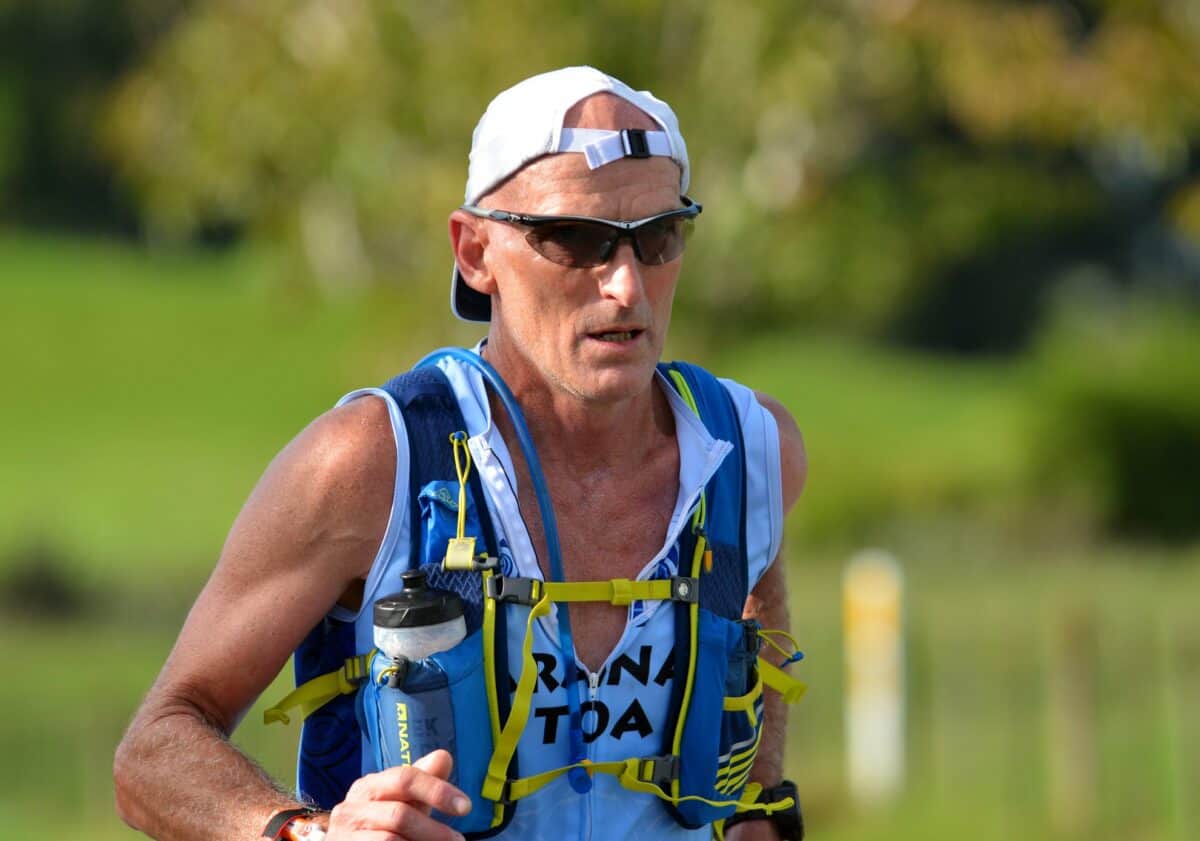
Commonwealth Games silver medalist Blair Cox has sage advice for competitors in the 2026 Master’s Games.
“There will always be someone fitter and stronger, but you’re on the start line and still doing it. Be grateful because you are lucky and some aren’t quite as lucky as you,” says Blair.
When Blair finished an extreme triathlon in 2018 – the Kiwiman Xtreme Triathlon – he was feeling fit as a fiddle. The race had taken him 14 hours. So, he was tired. And he’d had trouble “pushing off with his right leg,’’ due to an issue with his calf. But he wasn’t too bothered. A couple of months later he decided to go to the doctor about his leg.
The diagnosis was devastating. He had motor neurone disease (MND), which is a progressive, terminal illness that gradually removes the person’s ability to move, speak, eat — and eventually, breathe. It was a shock. All he had was a “dodgy leg”.
Blair remembers saying to the neurologist: “So fit people get sick? He said ‘yes’.”
Blair remembers saying to the neurologist: “So fit people get sick? He said ‘yes’.”
In 1986, Blair won a silver medal at the Edinburgh Commonwealth Games for the men’s team time trial in road cycling. Since then, he has competed in 12 Ironman events and when the Ironman became a bit “simple” he completed two extreme triathlons. “They're based around Ironman distance, but it's about elevation. One of those events is Kiwiman, which is run here in New Plymouth.”
The Kiwiman claims to be the only extreme full distance triathlon in New Zealand. It’s a 3.6km swim, 194km on the bike around Taranaki Maunga, cycling up four peaks along the way, followed by a 46km run from the sea to the foot of the maunga.
In the eight years since, life has taken a different direction. Blair retired in August 2025, selling the business he owned – Mitchell Cycles on Devon St East in New Plymouth.
“The day to day was getting harder,” he says. The prognosis was “pretty grim,” but he has adopted a positive mindset and now has peace with his diagnosis.
“I don't focus on what I can't do. I focus purely on what I can do. I get up and think, what am I doing today? I don't worry about yesterday. I don't worry about tomorrow.”
While he initially lost some use of an arm and a leg and now uses double hiking poles to keep him upright and stable, the illness hasn’t progressed quite as quickly as expected. “However, I’m still losing muscle and strength, and fatigue is a big factor now.”
Blair has been able to continue with movement in his daily routine, although it looks a little different now. “I do daily exercise in the morning. What that is depends on how I feel. A mix of outdoor and indoor biking on an e-bike. Walking and resistance training. I focus on moving and it helps mentally,” he says.
“I’m grateful every day and accept things the way they are. Life is truly wonderful. While things might not be the way you want you can choose to remain upbeat.”